

OpenAI launched Businesses in ChatGPT on November 10, 2026, four days after Marketplace Pulse's Juozas Kaziukėnas spotted a "claim your business" banner in the app. It gives brands the first official data on how often ChatGPT mentions them and how many users click through. OpenAI says ChatGPT reaches 1.2 billion people a week.
What ChatGPT Business Hub includes
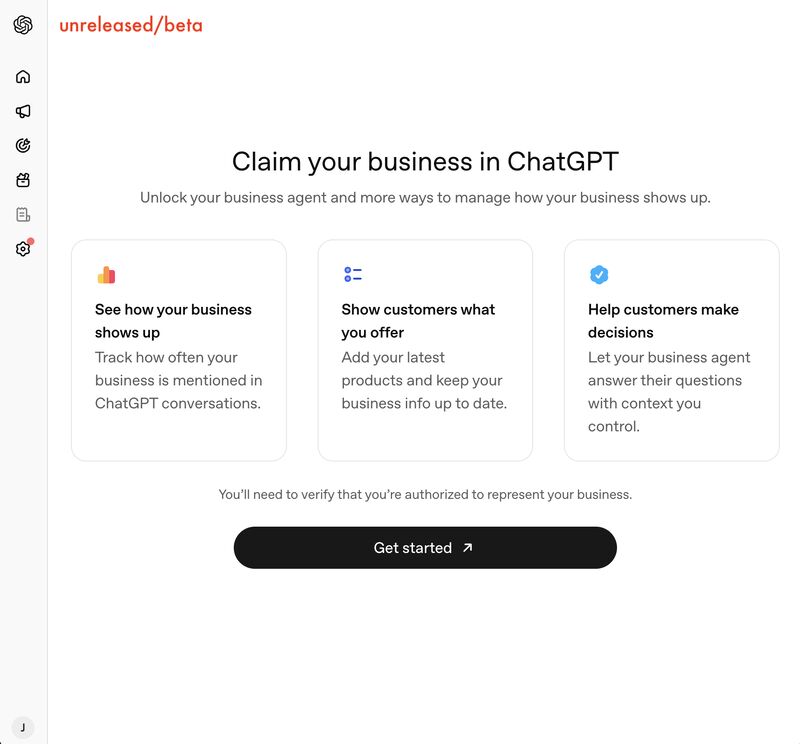
According to OpenAI's announcement, businesses can claim their business, manage their information and see insights on how people engage with them in ChatGPT. The launch has three parts.
Claimed profiles and product data
Eligible businesses with a website can claim their organization, then edit key details once verified. Retailers can add product feeds with pricing and availability. Claimed profiles get a blue check, which OpenAI says shows the profile has been claimed. Unite.AI notes the check does not mean OpenAI has checked everything on it, and that profiles can also pull information from other sources.
Visibility data
Business Hub reports three aggregated numbers, per OpenAI:
- Mentions: how often ChatGPT mentions the business
- Clicks: how many users click through to the website
- Discovery topics: common themes across conversations that cite the business's website
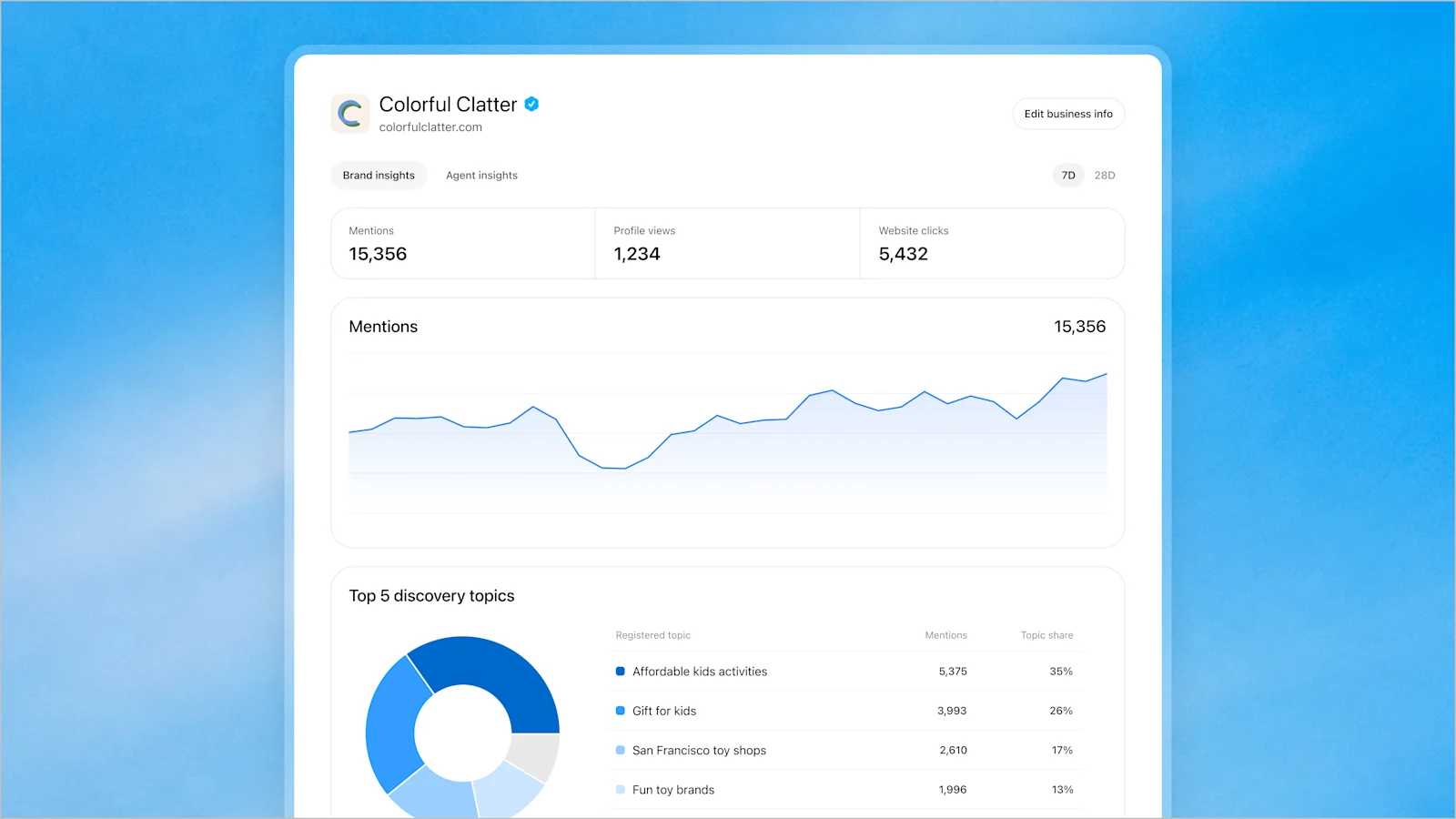
OpenAI says businesses never see users' chats. Insights only appear once conversations pass minimum thresholds. Reuters also lists views, but OpenAI's announcement does not.
Business Agents
When a business appears in an answer, users can open its profile and chat with its agent. The agent answers from product and policy information the business provides. These chats are labeled and kept separate from ChatGPT's own answers. Under OpenAI's Business Agents policy, agents must be clear they are AI, cannot use pressure tactics, and need the user's explicit authorization before sharing their information or submitting a purchase, booking or form. OpenAI reviews agents before they go live and can remove them.
Leak vs. launch: what changed in four days
| Detail | Spotted (Nov 6) | Launched (Nov 10) |
|---|---|---|
| Verification | Shopify reported as one method | Shopify optional, any eligible business with a website |
| Metrics | Impressions and clicks | Mentions, clicks and discovery topics |
| Prompt data | None | Still none, but topic themes added |
| Markets | Unknown | Business Hub wherever ChatGPT is available, agents US only |
| Ads | Unknown | Agents can be sponsored as ChatGPT Ads destinations |
Takeaway: the launch is wider than the leak suggested. Non-Shopify brands and European businesses can claim profiles today.
How OpenAI built up to this
- September 2025: Instant Checkout and the Agentic Commerce Protocol bring merchant product feeds into ChatGPT.
- 2026: ChatGPT ads expand. The Next Web reports they passed a $1 billion annual run rate in August.
- September 16, 2026: OpenAI begins testing Sponsored Agents with select US advertisers.
- October 2026: ChatGPT links stop passing a referrer after the GPT-6 rollout, so the clicks show up as Direct in GA4, as Relevant Audience reported.
- November 6, 2026: Kaziukėnas spots the Business Hub banner.
- November 10, 2026: OpenAI launches Businesses in ChatGPT in beta.
What the ChatGPT Business Hub means for SEO and GEO
Our take: ChatGPT now has its own version of Google Business Profile and Search Console. The profile half matters more than it looks. Claiming won't raise your rankings, but it lets you correct what ChatGPT shows about your business. ChatGPT already builds profiles from other sources, so unclaimed brands leave that information unchecked.
The data half is useful, with limits. Mentions and clicks come from OpenAI itself, which matters while GA4 counts ChatGPT clicks as Direct. Discovery topics are the closest thing to query data, but they show themes, not prompts. Thresholds mean small sites may see nothing at first. And Business Hub covers ChatGPT only. Gemini, Perplexity, Claude and AI Overviews still need other tools.
Watch the ads tie-in. Businesses can now pay to send ChatGPT Ads traffic to their agent. TNW cites Digiday reporting that paying does not change how often ChatGPT recommends a business. That separation is the line to watch as the product grows.
What to do now:
- Claim your business in ChatGPT and check every detail on the profile, including what ChatGPT pulled from other sources.
- If you sell online, add a product feed with current prices and stock. Shopify merchants can connect through the Shopify admin.
- Set a baseline: record GA4 Direct traffic and your prompt tracking numbers before Business Hub data arrives, then compare.
- Map discovery topics to your content. If ChatGPT cites you for themes you don't cover in depth, expand those pages.
- Read the agent rules before you build an agent. OpenAI reviews each one, and verification alone doesn't make you eligible.
What to watch during the beta
OpenAI calls this an early step. Watch for Business Agents expanding beyond the US and beyond ecommerce, what the aggregation thresholds actually are, how far back the data goes, any export or API, and whether sponsored agents begin to blur the line between ads and answers.
For the first time, ChatGPT tells brands how often it mentions them. It still won't tell them which questions triggered those mentions, so prompt tracking still has a job.
Credit: Juozas Kaziukėnas of Marketplace Pulse first spotted the feature on LinkedIn.